# Languages

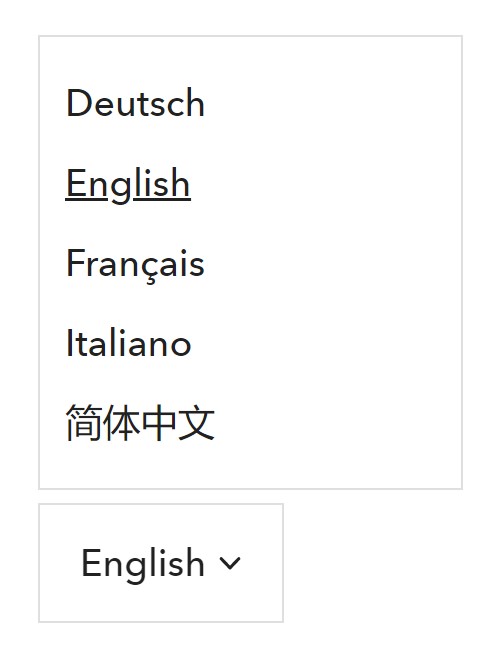
<figure><img src="https://1836495117-files.gitbook.io/~/files/v0/b/gitbook-x-prod.appspot.com/o/spaces%2FOdebKCa6IK9qfbdvSKj0%2Fuploads%2Ft8EPqg5p3NWhmC4VSGP1%2F7.dropdown.jpg?alt=media&#x26;token=224d0a2b-fbe1-47ad-afc6-f7c6c3a8a702" alt="An example of language selector dropdown"><figcaption></figcaption></figure>

A multilingual website will attract new users from other countries and increase your sales.

To display a language dropdown as in the image above in your store, check out the following steps:

## How to add more languages to your site?

**Step 1:** In the Shopify Admin, navigate to **Settings.**

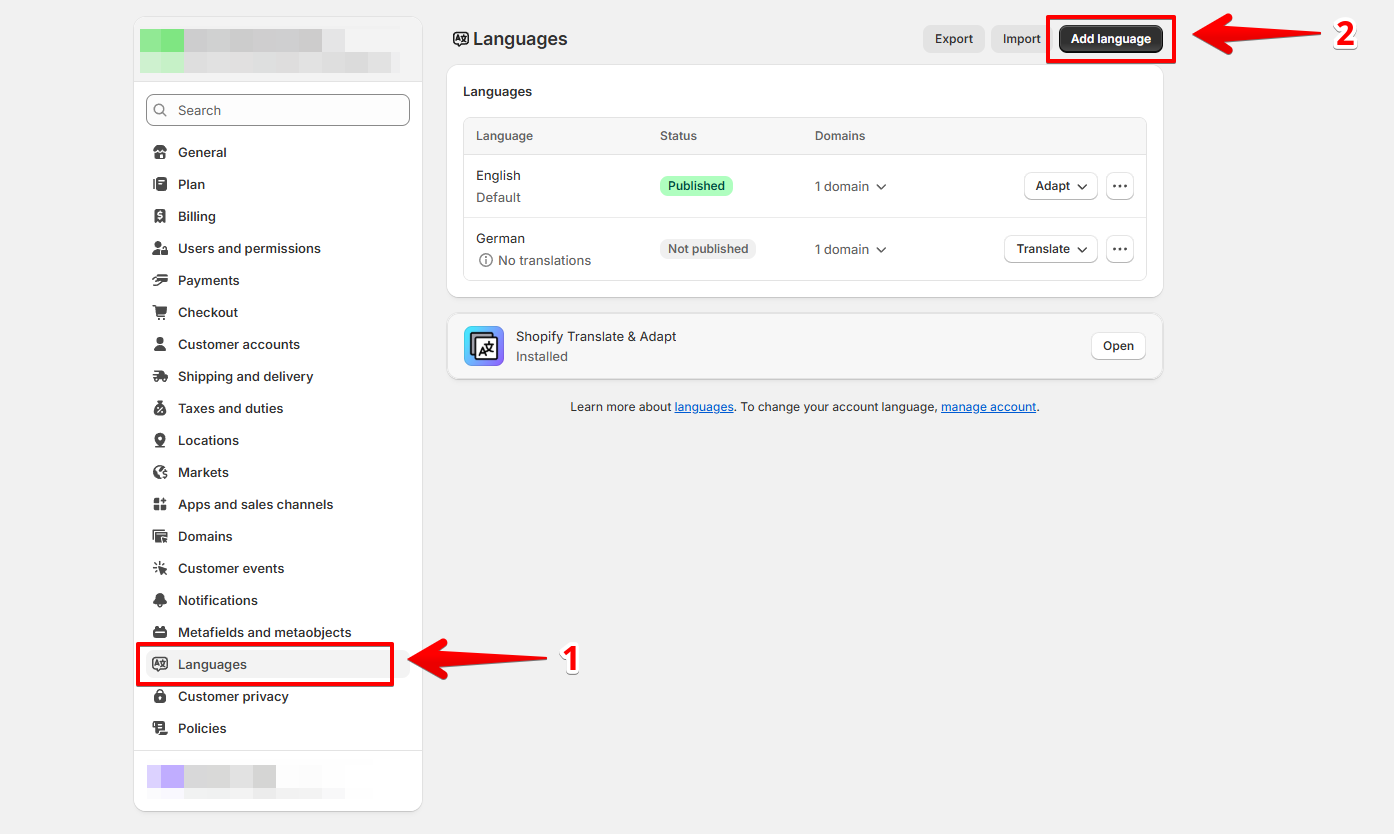
**Step 2:** To add more languages to your store, choose **Languages > Add languages.**
<figure><img src="https://1836495117-files.gitbook.io/~/files/v0/b/gitbook-x-prod.appspot.com/o/spaces%2FOdebKCa6IK9qfbdvSKj0%2Fuploads%2FhuR5c6OAf7L26w3CTomP%2Fimage.png?alt=media&#x26;token=4c4ca066-fc8c-41f3-9e36-fd1fe6dde470" alt=""><figcaption></figcaption></figure>

**Step 3:** Choose the languages you want to add to your site.

{% hint style="info" %}
Use the Shopify [Translate & Adapt app](https://apps.shopify.com/translate-and-adapt), or a [compatible third-party translation app](https://apps.shopify.com/collections/apps-for-store-languages), to translate your store. Alternatively, you can follow the instructions to [import your translations](https://help.shopify.com/en/manual/markets/languages/translate) directly into Shopify.
{% endhint %}

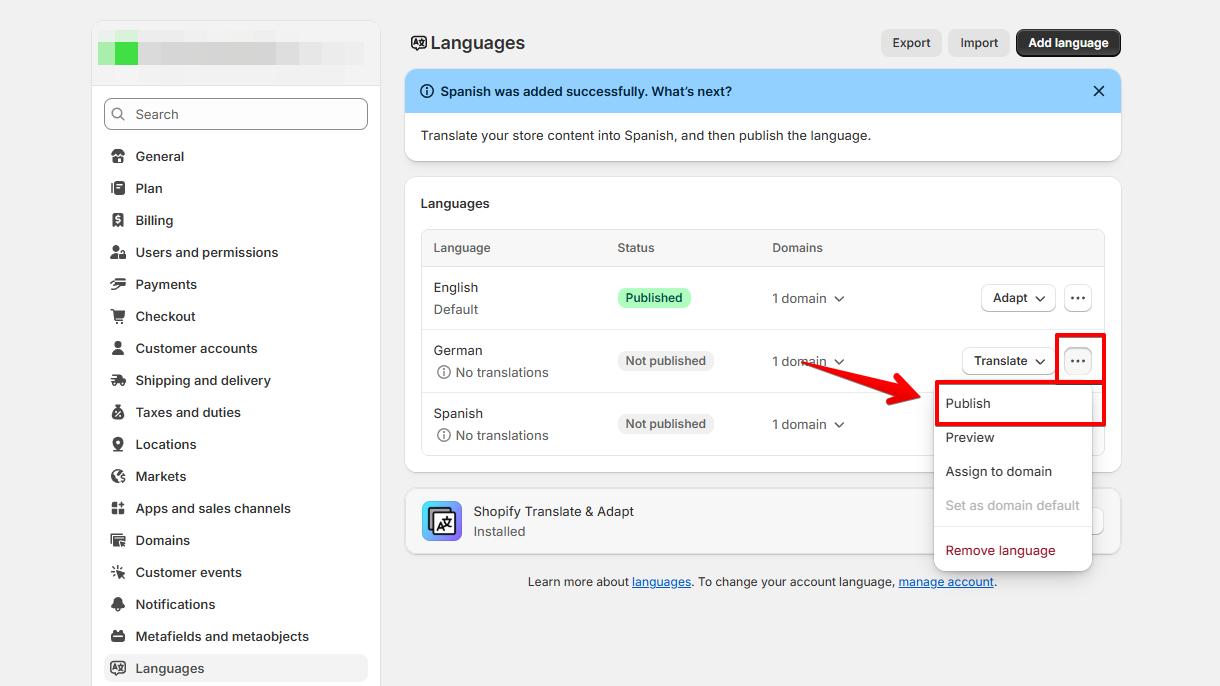
**Step 4:** Hit **Publish** when you're done.
<figure><img src="https://1836495117-files.gitbook.io/~/files/v0/b/gitbook-x-prod.appspot.com/o/spaces%2FOdebKCa6IK9qfbdvSKj0%2Fuploads%2FSkLlDBlWh9FQnoxZ4Kcy%2Fimage.png?alt=media&#x26;token=93e538cb-42c9-4e59-ae07-27c8ea657707" alt=""><figcaption></figcaption></figure>

{% hint style="warning" %}
The languages option shows in the **Header** or **Footer** of the theme. Therefore, you need to enable the **language selector**.
{% endhint %}


---

# Agent Instructions: Querying This Documentation

If you need additional information that is not directly available in this page, you can query the documentation dynamically by asking a question.

Perform an HTTP GET request on the current page URL with the `ask` query parameter:

```
GET https://docs.foxecom.com/zest-theme/languages-and-countries-regions/languages.md?ask=<question>
```

The question should be specific, self-contained, and written in natural language.
The response will contain a direct answer to the question and relevant excerpts and sources from the documentation.

Use this mechanism when the answer is not explicitly present in the current page, you need clarification or additional context, or you want to retrieve related documentation sections.
