# Recently viewed products

<figure><img src="/files/mJdfn0zGXniYpaKQCywO" alt=""><figcaption></figcaption></figure>

This section provides your customers with an easy way to find the products they’d previously visited, enhancing user conversion. This article will show you how to add and customize your **Recently viewed product** sections in Zest theme.

## How to add a Recently viewed products section

{% hint style="success" %}
Steps

1. In the theme editor **(Customize)**, click **Add section.**
2. Locate **Recently viewed products.**
3. Make necessary changes.
4. **Save.**
   {% endhint %}

## How to customize a Recently viewed products section

### General settings

Fill in the list's heading and description as well as the images' width and color scheme:
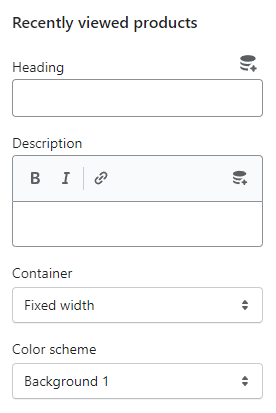
<figure><img src="/files/pVc0mfPQPehWPqgcTjrj" alt="Zest recently viewed products: General settings"><figcaption></figcaption></figure>

### Layout and slider settings:

You can adjust the elements based on your needs to display the recently viewed products by modifying the column number and column gap.

Select **Enable Slider** to let the section run automatically.

If you do not want to use rotation, disable it and use pagination or navigation instead.
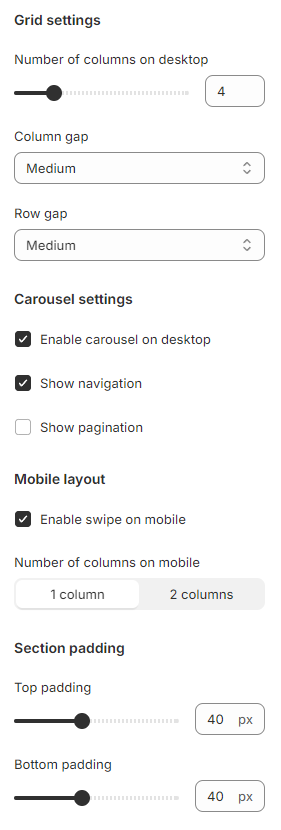
<figure><img src="/files/1nvnHyrBQntbCokSIUCe" alt=""><figcaption></figcaption></figure>

{% hint style="warning" %}
The maximum number of displayed products is 20.
{% endhint %}


---

# Agent Instructions: Querying This Documentation

If you need additional information that is not directly available in this page, you can query the documentation dynamically by asking a question.

Perform an HTTP GET request on the current page URL with the `ask` query parameter:

```
GET https://docs.foxecom.com/zest-theme/collections-and-products/product-page/recently-viewed-products.md?ask=<question>
```

The question should be specific, self-contained, and written in natural language.
The response will contain a direct answer to the question and relevant excerpts and sources from the documentation.

Use this mechanism when the answer is not explicitly present in the current page, you need clarification or additional context, or you want to retrieve related documentation sections.
