# Animations

{% hint style="info" %}
This setting is only available on **Minimog c3.5.0 onwards.** View [Changelog](/minimog-theme/changelog.md)
{% endhint %}

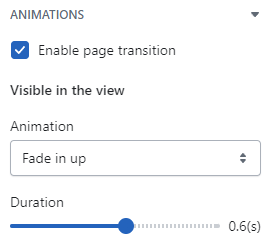
<figure><img src="/files/IiQpyVC7wZcwe9QWaHtT" alt=""><figcaption></figcaption></figure>

## How to enable page transition

{% hint style="success" %}
Steps:

1. In the theme editor (**Customize**), click **Theme settings.**
2. Navigate to the **Animations** section.
3. Click the checkbox **Enable page transition.**
4. Click **Save.**
   {% endhint %}

The **Page transition** displays a loading spinner while a page is loading. It enhances the user experience and augments the interest of web visitors.

You can set the **Loading size** and **color** for the page transition icon.
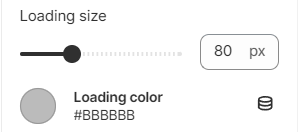
<figure><img src="/files/ySIXMaNPstoaCusOXGFS" alt="" width="224"><figcaption></figcaption></figure>

<figure><img src="/files/jQa771sg95ssumkHCIpi" alt=""><figcaption></figcaption></figure>

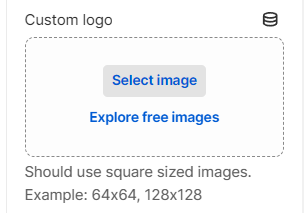
You can also upload your own **Custom logo** for the page-loading effect.

{% hint style="info" %}
Custom logo is only available on Minimog v4.1.0 onwards. View [Changelog](/minimog-theme/changelog.md)
{% endhint %}

{% hint style="success" %}
Square-sized images are recommended.
{% endhint %}

<figure><img src="/files/ZSEQudPkxoKcKokjgZ0z" alt=""><figcaption></figcaption></figure>

## How to set up the page animation

{% hint style="success" %}
Steps:

1. In the theme editor (**Customize**), click **Theme settings.**
2. Navigate to the **Visible in the view** section.
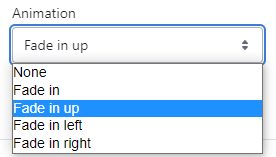
3. Select your **Animation** type and adjust the animation duration.
4. Click **Save**.
   {% endhint %}

As readers scroll up and down the site, the animation, when enabled, is triggered once the element comes into view. A little bit of animation in the loading process can add some flair, impress users, and get their attention.
<figure><img src="/files/iPBMlKGFZdncr6SqPBGv" alt=""><figcaption></figcaption></figure>

{% tabs %}
{% tab title="None" %}

<figure><img src="/files/QTKE9rBuvCUYKsGJmzRe" alt=""><figcaption></figcaption></figure>
{% endtab %}

{% tab title="Fade in" %}

<figure><img src="/files/SJ5VdKQvlM3YKo64GrTn" alt=""><figcaption></figcaption></figure>
{% endtab %}

{% tab title="Fade in up" %}

<figure><img src="/files/CLJdDSAz6RfhR8fprSWi" alt=""><figcaption></figcaption></figure>
{% endtab %}

{% tab title="Fade in left" %}

<figure><img src="/files/EVok2hI4Ol2s4FrYaBj9" alt=""><figcaption></figcaption></figure>
{% endtab %}

{% tab title="Fade in right" %}

<figure><img src="/files/zwhqcd7v4VR6mZyYlFmC" alt=""><figcaption></figcaption></figure>
{% endtab %}
{% endtabs %}

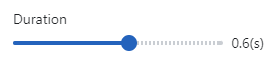
You can also set a **Duration** for the Animation. The animation duration is the length of time that an animation takes to complete one cycle.&#x20;

<figure><img src="/files/qfR7Gx0kjfBs9nHHrDsT" alt=""><figcaption></figcaption></figure>

Simply tweak the toggle. The time can be set between 0.1s-1s.

{% hint style="info" %}
**Most sections** come with animation settings.&#x20;

You can either set the section loading effect to each of the sections (if available) individually; or inherit the global settings that you set in your **Theme settings** > [**Animations**](broken://pages/SGDj3xqfmiaVH9ejAAMv).
{% endhint %}


---

# Agent Instructions: Querying This Documentation

If you need additional information that is not directly available in this page, you can query the documentation dynamically by asking a question.

Perform an HTTP GET request on the current page URL with the `ask` query parameter:

```
GET https://docs.foxecom.com/minimog-theme/theme-settings/animations.md?ask=<question>
```

The question should be specific, self-contained, and written in natural language.
The response will contain a direct answer to the question and relevant excerpts and sources from the documentation.

Use this mechanism when the answer is not explicitly present in the current page, you need clarification or additional context, or you want to retrieve related documentation sections.