# Blog posts

<div data-full-width="true"><figure><img src="/files/1OZ2q7N6tFYitFzBKwTz" alt=""><figcaption><p><a href="https://foxecom.com/pages/affiliate?utm_source=minimog%2Bhelp%2Bcenter&#x26;utm_medium=banner&#x26;utm_campaign=foxaffiliatelaunch2024">Explore FoxEcom Affiliate Program now </a><span data-gb-custom-inline data-tag="emoji" data-code="2728">✨</span></p></figcaption></figure></div>

{% embed url="<https://youtu.be/CygzoB9j97M>" %}

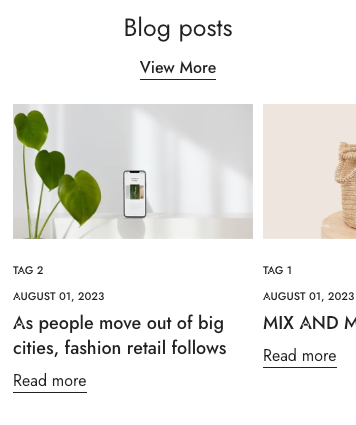
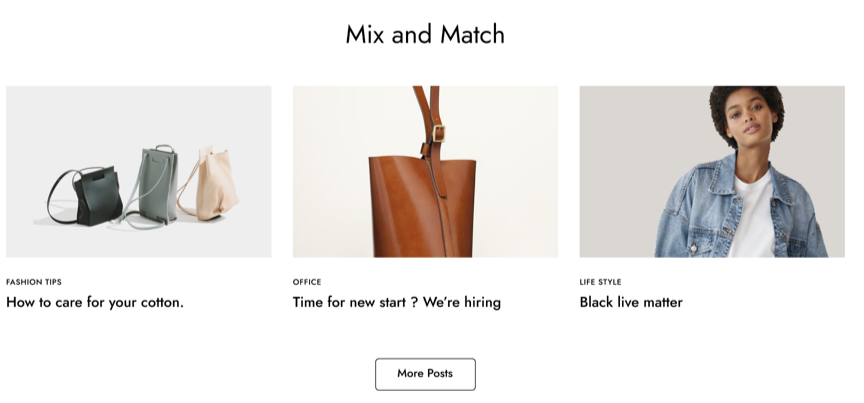
The blog post section is useful when you want to show new product launches, tips, or other news.
![](/files/-MlVQrAnj4iCu0phlPHx)

{% hint style="success" %}
Steps

1. In the theme editor **(Customize)**, click **Add section**
2. Locate **Blog posts**
3. **Save**
   {% endhint %}

To know more about how to add a blog to your online store, see [Blogs](https://help.shopify.com/en/manual/online-store/blogs).

This article shows you how to display your blog posts on your website using **Minimog** theme.

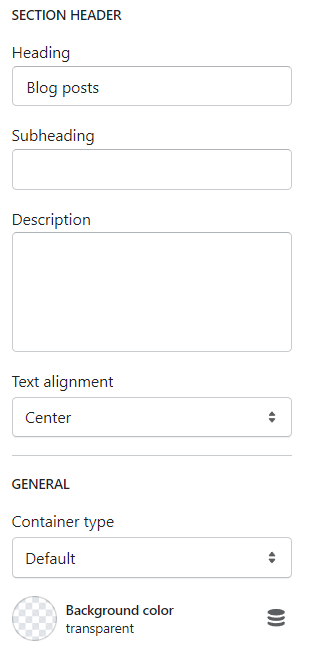
## **Section header** and **general:**&#x20;

Use the provided text fields to add a suitable heading/subheading/description. Leave any of them blank if you do not want to display them.&#x20;

Adjust the text alignment (left/center) along with the background color and container type.
<figure><img src="/files/qEJPJZkhfYWajb2w556c" alt=""><figcaption></figcaption></figure>

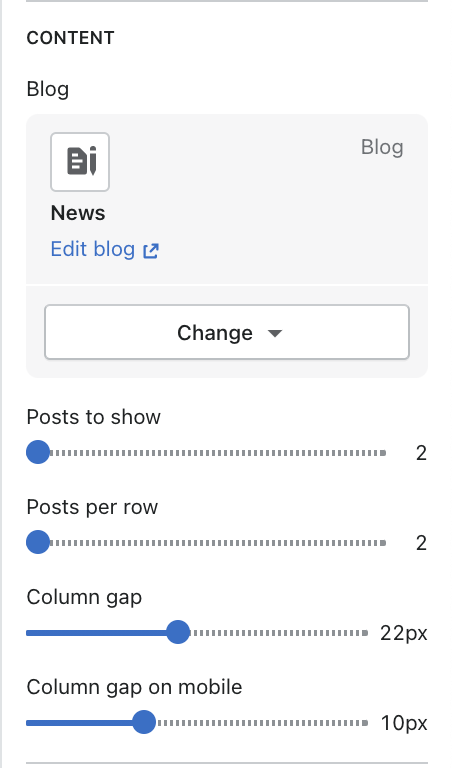
## **Content**

This section is for adding preferable blog posts. You can use the slider to adjust the number of blog posts per row and the number of displayed posts (between 2 and 12).

Additionally, the gap between each post can also be changed here.
![](/files/IX7KWJ7zRTCewY3w3sNj)

## **Card settings**

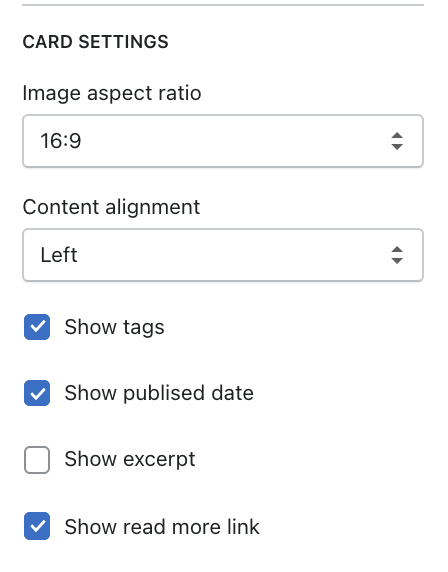
The card section is adjusting the blog image ratio and content alignment inside. Furthermore, you can enable/disable the card elements if needed:

* Show tags: Display relevant tags of the blog post
* Show published date: Display the date that the blog is issued
* Show excerpt: Display a short summary of the blog
* Show read more link: Lead the customers to the full blog post
![](/files/QgBRMWujtzf6v4ZBFQLH)

## **Button settings**

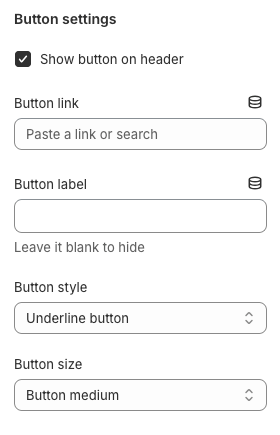
Display a call-to-action button to redirect customers to your desired pages. Add a **Label** and **Link** for one or both, then choose a **Button style** and adjust the **Button size.**
<figure><img src="/files/lE70PtazpVKk90qBxsCy" alt=""><figcaption></figcaption></figure>

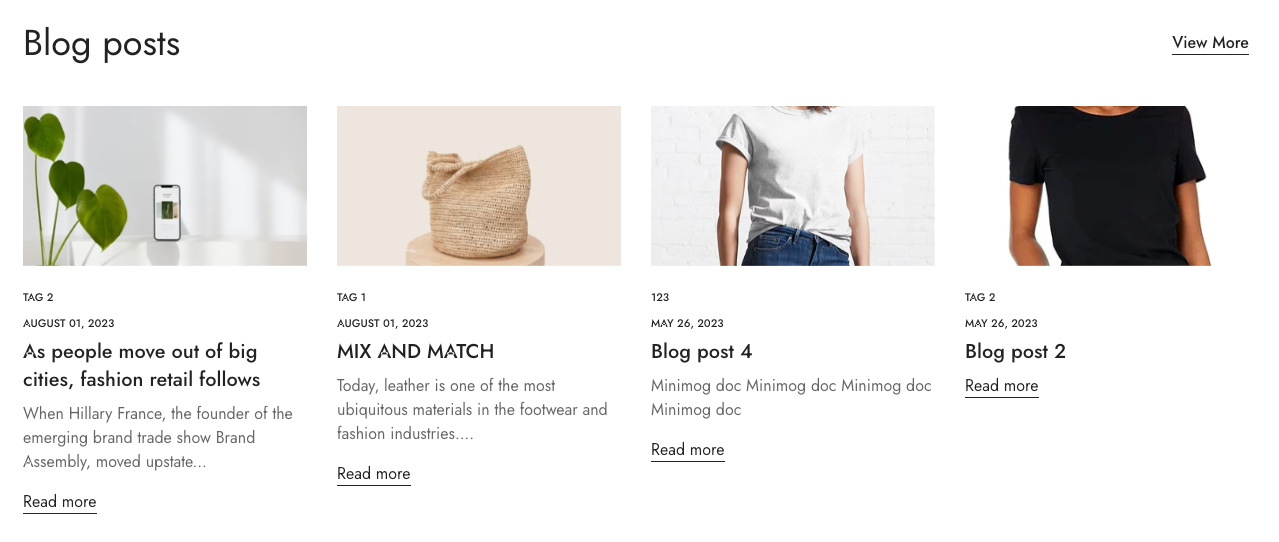
This button can be positioned on the header on both desktop and mobile.

For example:
{% tabs %}
{% tab title="On Desktop" %}

<figure><img src="/files/m9pEexIqOgbByVGaAkYf" alt=""><figcaption></figcaption></figure>
{% endtab %}

{% tab title="On Mobile" %}

<figure><img src="/files/Q8lwavzjRSsm6AhUfeE0" alt=""><figcaption></figcaption></figure>
{% endtab %}
{% endtabs %}


---

# Agent Instructions: Querying This Documentation

If you need additional information that is not directly available in this page, you can query the documentation dynamically by asking a question.

Perform an HTTP GET request on the current page URL with the `ask` query parameter:

```
GET https://docs.foxecom.com/minimog-theme/theme-sections/blog-posts.md?ask=<question>
```

The question should be specific, self-contained, and written in natural language.
The response will contain a direct answer to the question and relevant excerpts and sources from the documentation.

Use this mechanism when the answer is not explicitly present in the current page, you need clarification or additional context, or you want to retrieve related documentation sections.